Syama Prasad Mookerjee
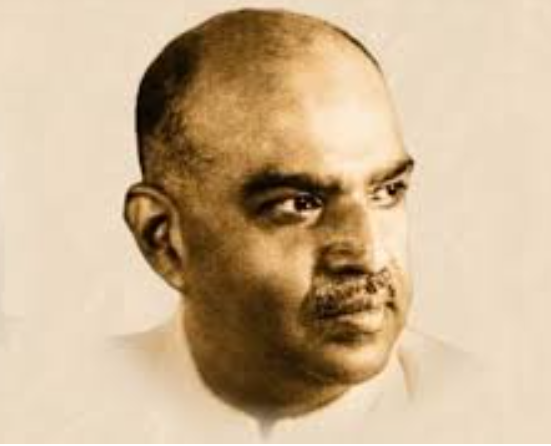
Why it Matters?
The Ministry of Culture has launched a two-year nationwide commemoration (2025–2027) of Dr. Syama Prasad Mookerjee’s 125th birth anniversary, celebrating his legacy through cultural events, exhibitions, and the release of a commemorative coin and stamp.
What You Should Know?
Dr. Syama Prasad Mookerjee was born in Calcutta as the son of Sir Ashutosh Mookerjee, a renowned educationist and the Vice-Chancellor of Calcutta University.
In 1934, at the age of 33, he became the youngest ever Vice-Chancellor of Calcutta University, a record that still stands today.
Dr. Mookerjee launched “Bang Wani,” a Bengali-language journal in 1922, and later “The Nationalist” in the 1940s to promote nationalist ideas and cultural awakening.
Political Career:
In the 1920s, Dr. Mookerjee joined the Indian National Congress but resigned due to ideological differences with its leadership.
He later joined the Hindu Mahasabha and became its acting President in 1940, where he called for complete independence from British rule.
In 1937, he played a key role in forming a Progressive Coalition Government in Bengal and served as the Finance Minister.
In 1951, he founded the All India Bharatiya Jan Sangh, which laid the foundation for what would later become the Bharatiya Janata Party (BJP).
After independence, he was appointed as the Minister for Industry and Supply in the Interim Government under Prime Minister Jawaharlal Nehru.
Contributions to Nation-Building:
Dr. Mookerjee was instrumental in setting up major public sector enterprises such as the Chittaranjan Locomotive Works.
He was a vocal opponent of Article 370 of the Constitution of India, which granted special status to the state of Jammu and Kashmir.
He also opposed the linguistic reorganization of states, arguing instead for administrative and economic efficiency as the basis for state boundaries.
In 1953, he was arrested during a protest against Jammu and Kashmir’s special status and died in custody under mysterious circumstances.
Legacy and Impact:
He is remembered as “The Lion of Parliament” for his sharp intellect, eloquent speeches, and unwavering commitment to national issues.
His ideological legacy continues to shape Indian politics through the Bharatiya Janata Party, which regards him as a foundational figure.