Heatwaves
Context: Addressing heatwaves requires collective societal action, such as designing better housing, adjusting work schedules, and investing in public health and food security, rather than relying solely on individual measures like air conditioning, which are neither accessible to all nor sustainable in the long term.
Important Pointers:
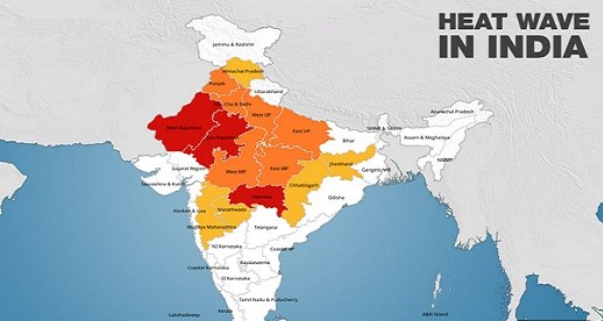
► Definition (India Meteorological Department - IMD): A heatwave is declared when the maximum temperature is ≥40°C in plains, ≥37°C in coastal areas, and ≥30°C in hilly regions, and the departure from normal is +4.5°C to +6.4°C. ► Severe Heatwave: When the temperature is ≥6.5°C above normal, or when it touches ≥45°C irrespective of normal. ► Duration: Usually occurs from March to June, sometimes extending into July in northern India. ► Causes: Prolonged dry spells; Clear skies allowing direct solar radiation; Urban Heat Island effect; Global warming and El Niño events. ► Most Affected Areas: Northwestern, Central, and Eastern India – especially Rajasthan, Punjab, Haryana, Uttar Pradesh, Bihar, Jharkhand, Odisha, and parts of Andhra Pradesh and Telangana. ► Impacts: Heatstroke and mortality; Reduced labour productivity; Crop damage and food insecurity; Energy and water stress. ► Vulnerable Groups: Elderly, children, outdoor workers, slum dwellers, and people with comorbidities. ► Mitigation Measures: National Action Plan on Climate Change (NAPCC); State and City-level Heat Action Plans (HAPs); Early warning systems and public advisories by IMD; Urban planning interventions (cool roofs, tree cover). ► India’s Global Role: Commitment to reduce emissions under the Paris Agreement and promote climate-resilient infrastructure.